Diet plan guide
Whole food plant-based eating for beginners: plants first
New to whole food plant-based eating? What it means, what to eat, a sample day, the vitamin B12 question, common mistakes and what research suggests.
Short answer
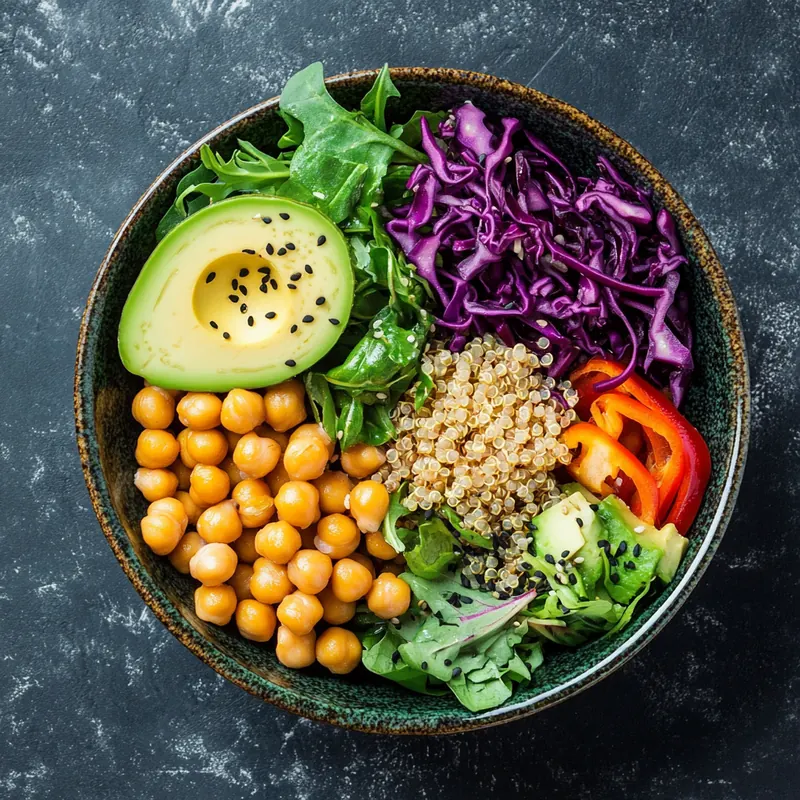
A whole food plant-based diet centers meals on vegetables, fruit, legumes, whole grains, nuts and seeds, and keeps processed food to a minimum. Some people go fully plant-based, others keep occasional animal products. The core is the same: mostly plants, mostly unprocessed. If you cut out animal foods completely, vitamin B12 needs attention.
Key points
- Whole food plant-based means mostly plants and mostly unprocessed. It does not have to mean fully vegan.
- Legumes and whole grains replace meat as the center of the plate.
- Quality matters. In a large US study, plant-based diets built on refined grains and sweets were linked with a higher risk of heart disease, not a lower one.
- On a fully plant-based diet, vitamin B12 has to come from fortified foods or a supplement.
- Ramp up slowly. Your digestion needs time to get used to more fiber.
What is a whole food plant-based diet?
A whole food plant-based diet centers meals on vegetables, fruit, legumes, whole grains, nuts and seeds, and keeps processed food to a minimum.
The name has two halves, and both matter:
- Plant-based means plants make up most of the plate. The American Heart Association describes plant-based eating as a style that emphasizes plant foods but is not strictly limited to them.
- Whole food means food that is close to how it grew. Lentils, oats and apples, not their boxed and sweetened versions.
Some people go fully plant-based. Others keep occasional fish, eggs or dairy. The core is the same: mostly plants, mostly unprocessed.
That is also the difference from "vegan". Vegan describes what is left out. Whole food plant-based describes what goes in. Fries and soda are vegan, and they are not what this pattern is about.
How does a whole food plant-based diet work?
- Legumes and whole grains replace meat as the base of most meals.
- Processing matters as much as ingredients. An apple beats apple juice. Oats beat a cereal bar.
- Fiber does a lot of the work: fullness, digestion and steadier energy.
- B12 needs attention on a fully plant-based diet. Fortified foods or a supplement are the usual answer.
What do you eat on a whole food plant-based diet?
| Eat more | Go easy on |
|---|---|
| Legumes every day: beans, lentils, chickpeas | Processed meat substitutes as daily food. They are still processed food |
| Whole grains: oats, brown rice, quinoa, whole grain bread | White flour and added sugar |
| Vegetables and fruit in as many colors as possible | Oil heavy cooking. Whole sources of fat beat poured fat |
| Nuts and seeds, a handful a day | Juice and sweet drinks in place of whole fruit |
Worried about protein? The American Heart Association says many people already eat more than enough, and lists tofu, edamame, quinoa, lentils, chickpeas and most beans as plant foods that provide it.
What does a day of whole food plant-based eating look like?
| Time | Meal |
|---|---|
| 8 am | Oats with soy milk, banana and chia seeds |
| 1 pm | Lentil and vegetable bowl with brown rice |
| 4:30 pm | Hummus with carrot and cucumber |
| 8 pm | Chickpea curry with whole grain rice and greens |
Water is the default drink. Our water intake calculator gives you a daily number to aim for.
What does the research say about plant-based diets?
The broad direction is well supported. The World Health Organization's healthy diet advice says carbohydrates should come mainly from whole grains, vegetables, fruit and pulses such as beans and lentils, and that everyone over the age of 10 should aim for at least 400 grams of fruit and vegetables a day. It also says that for many adults, a shift toward plant sources of protein may bring health benefits, particularly when the shift is away from red meat.
The detail that matters most is quality. A study in the Journal of the American College of Cardiology, supported by the National Institutes of Health, followed more than 200,000 US health professionals for over two decades. People whose diets scored highest for healthy plant foods, such as whole grains, fruit, vegetables, nuts and legumes, had about a 25% lower risk of coronary heart disease than those who scored lowest. People whose diets scored highest for less healthy plant foods, such as refined grains, sweetened drinks, fries and sweets, had about a 32% higher risk.
Two caveats. This was an observational study, so it shows a link, not cause and effect. And the participants were health professionals who reported their own diets, which may not reflect everyone.
Most of this research looks at plant-forward eating in general, not at a strict whole food plant-based diet, so be wary of big promises. On weight, whole plant foods are high in water and fiber, which makes them filling for their calories. That is the idea behind Volumetrics. No eating pattern guarantees weight loss.
What are the most common plant-based mistakes?
- Removing meat without adding legumes. The plate needs a new center, not a hole.
- Living on pasta and toast. Technically plant-based, nutritionally thin.
- Ignoring B12 on a fully plant-based diet.
- Going from zero to all-in overnight. Your digestion appreciates a ramp.
How do you make a plant-based diet stick?
- Convert recipes you already love. Chili, curry and bolognese all take lentils well.
- Use canned beans. They are as good as dried for almost everything.
- Batch cook grains and legumes twice a week. Every meal becomes assembly.
- Start with one meal. Make breakfast or lunch plant-based for a couple of weeks before you change dinner.
- Skip the junk food swaps. The American Heart Association's advice is not to replace meat with highly processed meat substitutes.
If going fully plant-based feels like too big a step, the Mediterranean diet is plant-forward and keeps fish, eggs and dairy. You can compare all seven plans on the diet plans page.
Who should check with a doctor first?
A whole food plant-based diet is broadly suitable for most people. Talk to your doctor or a dietitian first if you:
- Plan to go fully plant-based. Discuss B12 and iron, especially if you are pregnant or breastfeeding.
- Are under 18
- Have diabetes or take regular medication
- Have a digestive condition that is aggravated by a high fiber intake
- Have, or have had, an eating disorder
This page is general nutrition information, not medical advice. It does not diagnose, treat or prevent any condition.
Questions people ask
Is a whole food plant-based diet the same as a vegan diet?
Not quite. Vegan describes what is left out: all animal products. Whole food plant-based describes what goes in: mostly plants, mostly unprocessed. You can follow it and still eat occasional fish, eggs or dairy, and a diet of fries and soda is vegan without being whole food.
Where do you get protein on a plant-based diet?
From legumes, soy foods, whole grains, nuts and seeds. The American Heart Association lists tofu, edamame, quinoa, lentils, chickpeas and most beans, and notes that many people already eat more than enough protein. Put a legume at the center of most meals.
Do you need a B12 supplement on a plant-based diet?
If you eat no animal products at all, the NHS says vegan sources of B12 are limited and a supplement may be needed. Fortified foods such as some breakfast cereals, soy drinks and nutritional yeast also count. If you still eat meat, fish or dairy, you should get enough from food. Ask your doctor or a dietitian if you are unsure.
Can you lose weight on a whole food plant-based diet?
Some people do, because whole plant foods are filling for their calories. Nothing is guaranteed, and a plant-based diet built on refined grains, sweets and fried food is a different thing altogether. Portions and quality both count.
Are meat substitutes OK on a whole food plant-based diet?
Now and then, yes. As daily food, no. They are still processed food, and the American Heart Association advises against replacing meat with highly processed substitutes. Beans, lentils and chickpeas are the better everyday swap.
Sources
- Healthy diet fact sheet. World Health Organization (2026)
- How does Plant-Forward (Plant-Based) Eating Benefit Your Health? American Heart Association
- The vegan diet. NHS
- B vitamins and folic acid. NHS
- Healthful and Unhealthful Plant-Based Diets and the Risk of Coronary Heart Disease in U.S. Adults. Journal of the American College of Cardiology (2017)
Checked against these sources on 21 November 2026. We write "research suggests" where the evidence is still growing. How we write.
Educational information, not medical advice. This page shares general information and does not replace advice from your own doctor. Talk to a doctor before starting any diet or fasting plan, especially if you are pregnant, breastfeeding, under 18, diabetic, on medication or have a history of disordered eating.